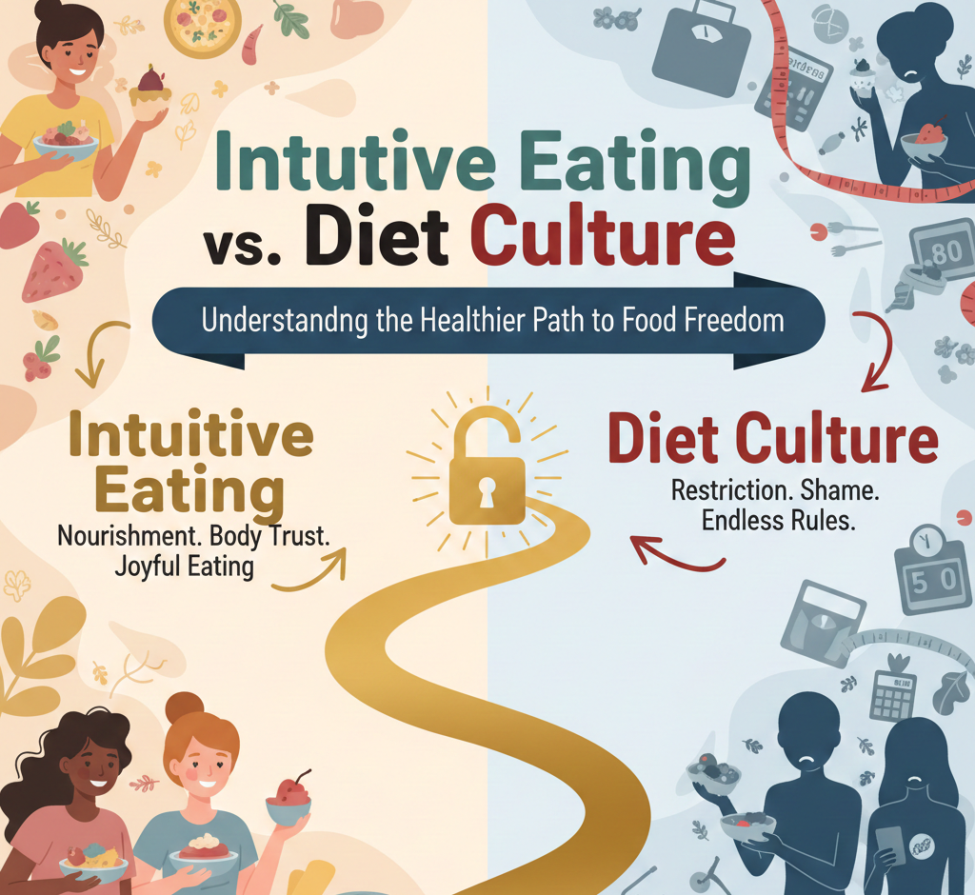
In the modern wellness landscape, people are constantly exposed to diet trends promising quick fixes, rapid weight loss, and "perfect" eating habits. This environment is dominated by diet culture, which often creates confusion, guilt, and long-term health struggles. In contrast, intuitive eating promotes a respectful, science-backed approach that focuses on internal body cues rather than external rules. Understanding the differences between these two philosophies can help individuals make more sustainable and health-centered choices.
Core Philosophy
Diet Culture
Believes weight loss is the primary indicator of health
Encourages food restriction and rigid meal rules
Labels foods as "good," "bad," "clean," or "cheat"
Relies heavily on willpower and self-control
Intuitive Eating
Views health as multi-dimensional (physical, mental, emotional)
Encourages listening to hunger, fullness, and satisfaction cues
Removes moral judgment from food choices
Builds self-trust and body awareness
Relationship With Hunger and Fullness
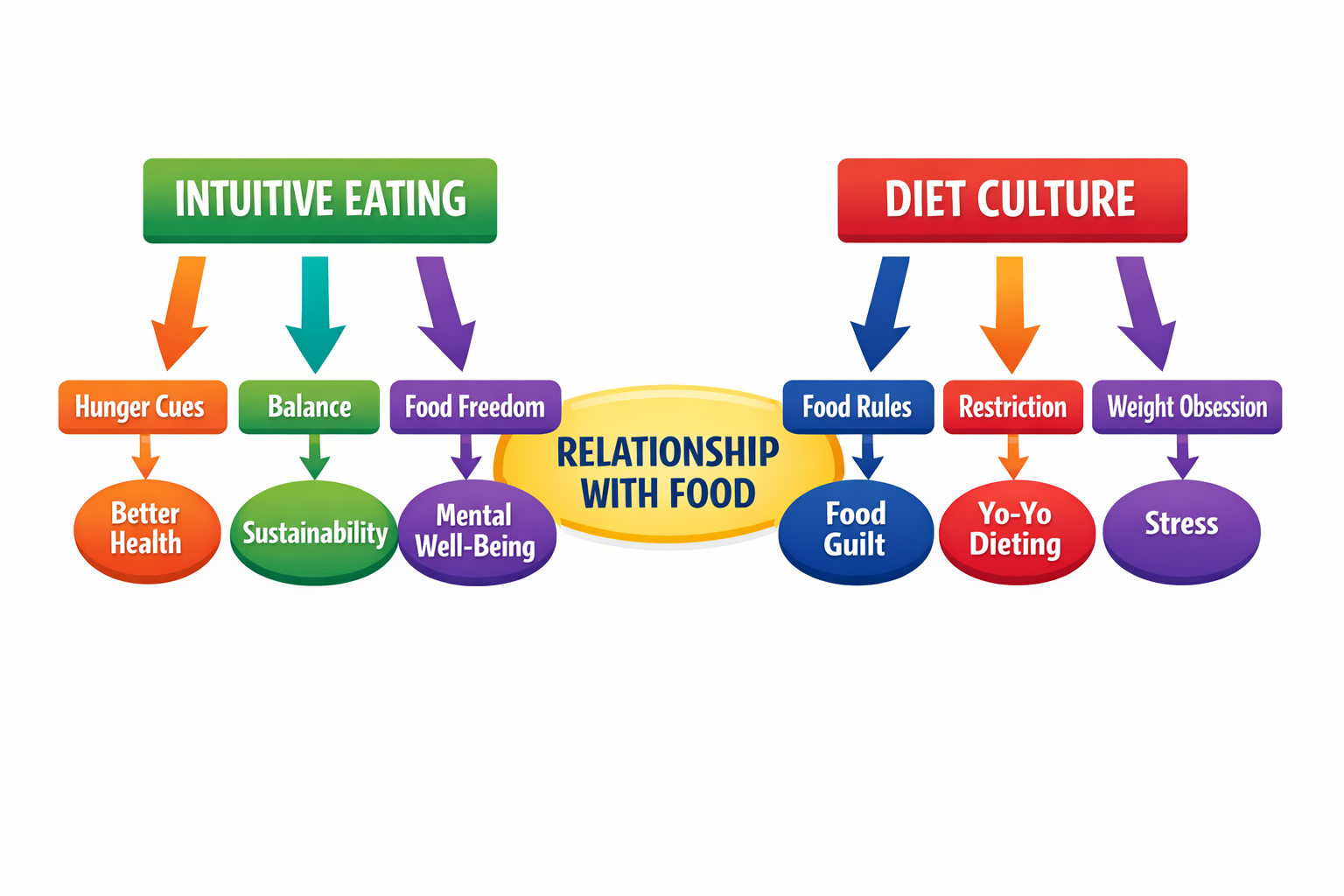
Diet culture often teaches people to ignore hunger by following calorie limits, fasting windows, or preset meal plans. Over time, this disconnect can lead to overeating, cravings, and metabolic disruption.
Intuitive eating:
Honors biological hunger as a survival signal
Encourages eating before extreme hunger sets in
Promotes stopping when comfortably full
Helps restore natural appetite regulation
Psychological Impact
Diet culture is closely linked to:
Food guilt and shame
Anxiety around social eating
Obsessive calorie tracking
Cycles of restriction and binge eating
Intuitive eating supports:
Reduced food-related stress
Improved self-esteem and body image
Better emotional regulation around food
A more peaceful and confident eating experience
Sustainability and Long-Term Results
Most diets fail long-term because they are restrictive and difficult to maintain. When the diet ends, weight regain and frustration often follow, leading to repeated dieting cycles.
Intuitive eating:
Is adaptable across life stages, cultures, and preferences
Supports consistency without rigid rules
Encourages gradual behavior change
Promotes long-term adherence and lifestyle integration
Physical Health Outcomes
While diet culture focuses on the scale, intuitive eating emphasizes internal health markers such as:
Stable blood sugar levels
Improved digestion and gut health
Better cholesterol and metabolic indicators
Increased energy and reduced fatigue
Research links intuitive eating with healthier eating patterns and lower risk of disordered eating behaviors, making it a safer and more holistic approach.
Food Choices and Nutrition Quality
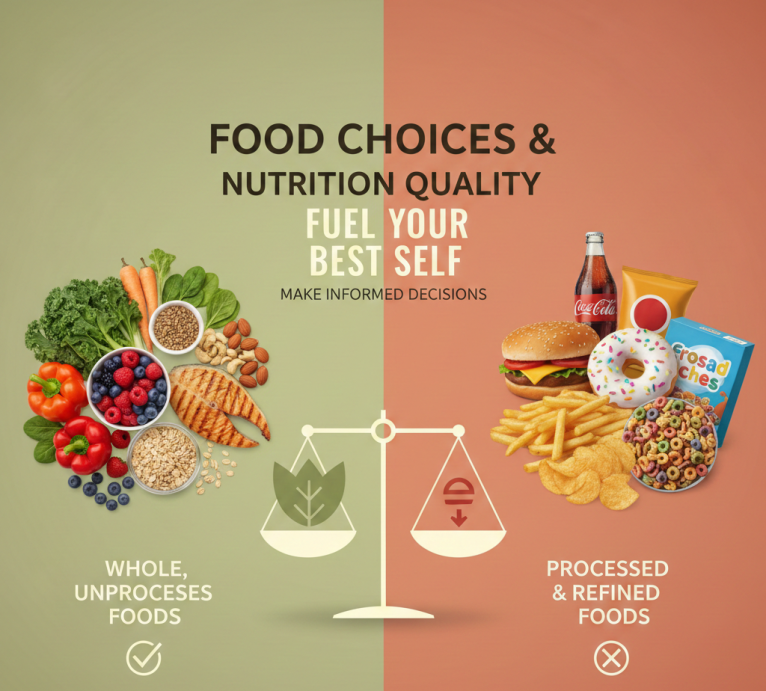
Diet culture often eliminates entire food groups, which can lead to nutrient deficiencies and fear-based eating.
Intuitive eating:
Encourages gentle nutrition without obsession
Allows flexibility while considering nutrient balance
Helps individuals notice how foods affect their body
Supports personalized food choices rather than one-size-fits-all diets
Body Image and Self-Respect
Diet culture promotes unrealistic body ideals and comparison, often leading to dissatisfaction even after weight loss.
Intuitive eating:
Respects body diversity and genetic differences
Encourages caring for the body as it is
Shifts focus from appearance to function and well-being
Builds a healthier, more compassionate self-image
Comparison Chart: Intuitive Eating vs Diet Culture
| Aspect | Intuitive Eating | Diet Culture |
|---|
| Food Approach | Flexible and balanced | Restrictive and rule-based |
|---|
| Focus | Body signals and well-being | Weight loss and appearance |
|---|
| Mindset | Self-trust and awareness | Control and discipline |
|---|
| Emotional Impact | Reduces guilt and stress | Often causes food anxiety |
|---|
| Sustainability | Long-term lifestyle | Short-term results |
|---|
| Health Outcome | Holistic physical & mental health | Often leads to weight cycling |
|---|
Role of Professionals in Intuitive Eating
Transitioning away from diet culture can be challenging, especially for individuals with chronic conditions like diabetes, PCOS, or heart disease. Working with qualified nutrition professionals helps integrate intuitive eating principles with medical nutrition therapy, ensuring safety and personalization.
Is intuitive eating the same as eating whatever you want?
No. Intuitive eating focuses on listening to hunger, fullness, and body cues while making mindful, nourishing food choices. It includes balanced nutrition, not uncontrolled or impulsive eating.
Can intuitive eating help with medical conditions like diabetes or PCOS?
Yes. When guided by a qualified nutrition professional, intuitive eating can be adapted to support medical conditions by combining body awareness with personalized, evidence-based nutrition strategies.
Why do most diets fail in the long term?
Most diets rely on restriction and rigid rules, which are difficult to sustain. This often leads to cycles of deprivation, overeating, and weight regain, negatively impacting both physical and mental health.
How long does it take to see benefits from intuitive eating?
Benefits such as reduced food stress, improved digestion, and better eating consistency can begin within weeks, while long-term physical and emotional improvements develop gradually over time.
The Bottom Line
Intuitive eating and diet culture represent two opposite approaches to health. Diet culture thrives on restriction, control, and external validation, often at the cost of mental and physical well-being. Intuitive eating empowers individuals to reconnect with their bodies, make informed choices, and build a sustainable relationship with food. Choosing intuitive eating is not about abandoning health goals—it is about achieving them through balance, awareness, and self-respect.
Dytoclick is an innovative software designed specifically for dietitians, helping them create personalized nutrition plans and efficiently manage client progress. Along with its practical tools, Dytoclick also serves as a reliable knowledge platform, offering expert content on diet, nutrition, and health-related topics. By combining technology with education, Dytoclick empowers professionals to make informed dietary recommendations that support both physical and mental well-being.