The healthcare landscape of 2026 has officially broken the "one-size-fits-all" mold. We are moving from a system that tells you what you should have done to a system that tells you what to do now.
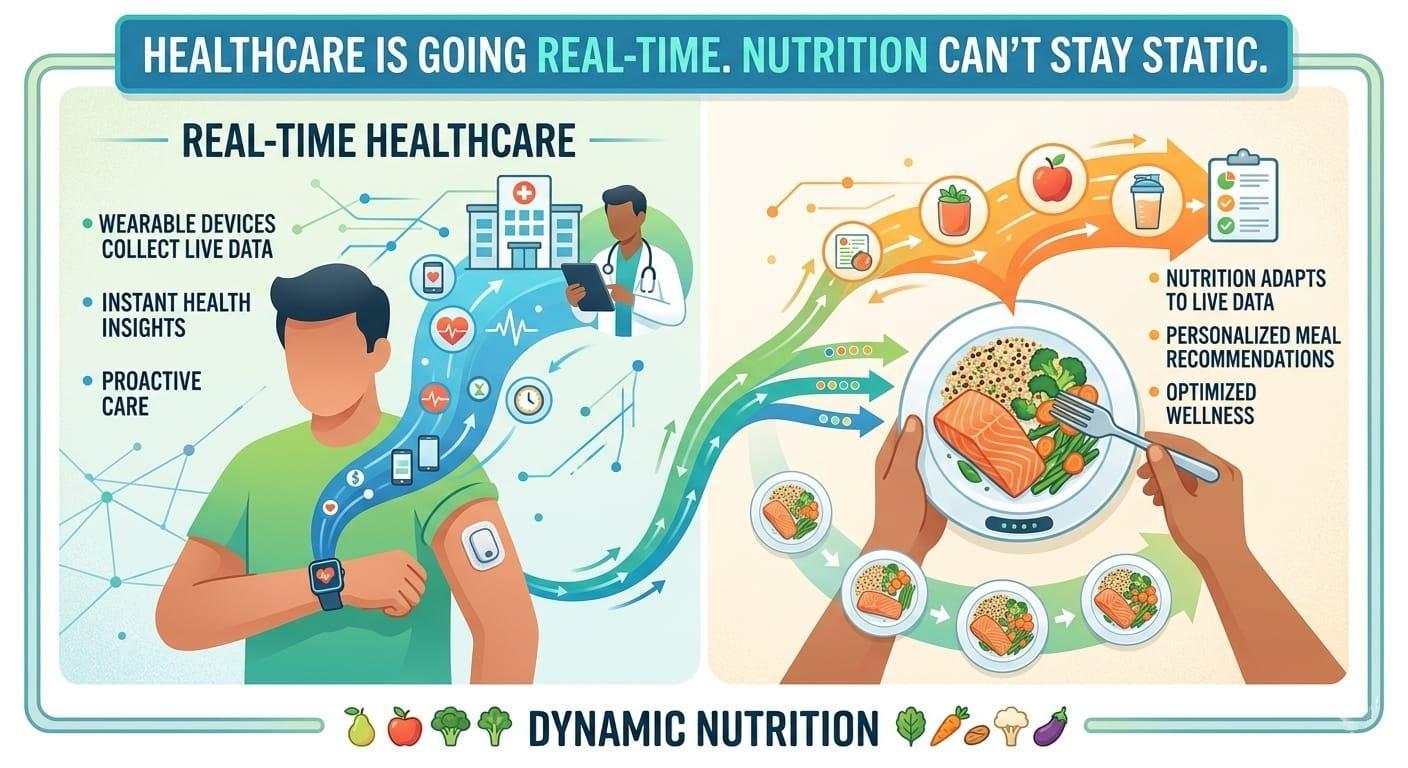
I. The Core Conflict: Static vs. Dynamic
| Feature | Traditional Nutrition (The Old Way) | Real-Time Nutrition (2026 Model) |
|---|
| Data Source | General population averages (RDAs) | Individual bio-signals (CMM/Wearables) |
|---|
| Timing | Fixed daily targets (e.g., 2,000 calories) | Fluctuating needs based on hourly stress/load |
|---|
| Response | Reactive (adjusting after weight gain) | Proactive (adjusting before metabolic spikes) |
|---|
| Primary Goal | Deficiency prevention | Performance and Longevity optimization |
|---|
II. The Four Pillars of the 2026 Nutrition Ecosystem
1. The Bio-Feedback Loop
Modern healthcare relies on Continuous Metabolic Monitoring (CMM). Sensors no longer just track movement; they measure the chemical "conversation" inside your body.
Instant Calibration: If a wearable detects a poor night of sleep (high cortisol), the integrated nutrition app automatically lowers the day's carbohydrate threshold to prevent insulin resistance.
Hydration Intelligence: Real-time sweat analysis prompts electrolyte intake during exercise before performance dips.
2. AI-Synthesized Meal Architecture
In 2026, Artificial Intelligence acts as the "translator" between your blood chemistry and your grocery list.
Contextual Guidance: Your digital assistant knows you have a high-stress presentation at 2:00 PM and suggests a low-glycemic lunch to ensure cognitive stability.
Nutrigenomic Integration: Recommendations are filtered through your genetic blueprint, identifying if you require higher dosages of specific micronutrients like Methyl-B12 or Vitamin D.
3. Precision Disease Management
For those managing chronic conditions, nutrition is now a "digital twin" of their medical treatment.
The "Auto-Pilot" Diet: For diabetics, closed-loop systems analyze food intake logs and glucose levels to provide micro-adjustments in real-time, reducing the risk of hypo- or hyperglycemia.
Inflammatory Tracking: Patients with autoimmune disorders receive alerts when specific dietary patterns correlate with rising inflammatory markers.
4. The "Democratization" of Performance
What was once reserved for elite athletes is now accessible via smartphone.
User Empowerment: By seeing how a "healthy" smoothie affects their specific blood sugar, users gain biological literacy, making it easier to stick to habits that actually work for their unique body.
III. Navigating the 2026 Hurdles
Despite the progress, the "Data-Driven Plate" faces three main challenges:
The Privacy Paradox: Balancing the need for deep biological data with the right to medical anonymity.
Algorithm Fatigue: Preventing "over-optimization" where users feel paralyzed by too much data.
Siloed Systems: Ensuring that a fitness tracker, a smart fridge, and a doctor's portal all "speak" the same data language.
1. Is real-time nutrition only for athletes or people with medical conditions?
No. While this technology began in elite sports and clinics, in 2026 it has shifted toward "Healthspan" optimization for everyone. Whether you want to fix afternoon energy crashes, improve sleep, or prevent metabolic disease before it starts, real-time data helps you understand how your unique body reacts to your specific environment and food choices.
2. How does a wearable device actually know what I specifically should eat?
It functions as a "Metabolic Translator." The device tracks live biomarkers (like heart rate, sleep quality, and glucose levels) and maps them against your Nutrigenomic profile (DNA) and Gut Microbiome. Instead of a generic "healthy" suggestion, the AI provides a recommendation that is biologically synchronized with your body's current state.
3. What happens to my data privacy? Who owns my metabolic information?
This is a top priority in 2026. Most leading platforms now use Decentralized Identity or Edge Computing, meaning your sensitive biological data is processed and stored on your device rather than a central corporate server. Users have "Right to Delete" mirrors and can choose exactly which data points are shared with their healthcare providers.
4. Can this technology help if I am taking weight-loss medications (like GLP-1s)?
Yes, it is becoming a clinical standard. Because medications like semaglutide significantly suppress appetite, real-time tracking is vital to ensure you are hitting critical protein and micronutrient targets. This prevents "muscle wasting" and ensures that weight loss comes from fat stores while maintaining lean muscle and bone density.
The Bottom Line
In 2026, nutrition is no longer a static suggestion; it is a live prescription. By aligning our intake with our internal biology in real-time, we aren't just eating to survive—we are fueling to thrive.
Dytoclick is an innovative software designed specifically for dietitians, helping them create personalized nutrition plans and efficiently manage client progress. Along with its practical tools, Dytoclick also serves as a reliable knowledge platform, offering expert content on diet, nutrition, and health-related topics. By combining technology with education, Dytoclick empowers professionals to make informed dietary recommendations that support both physical and mental well-being.