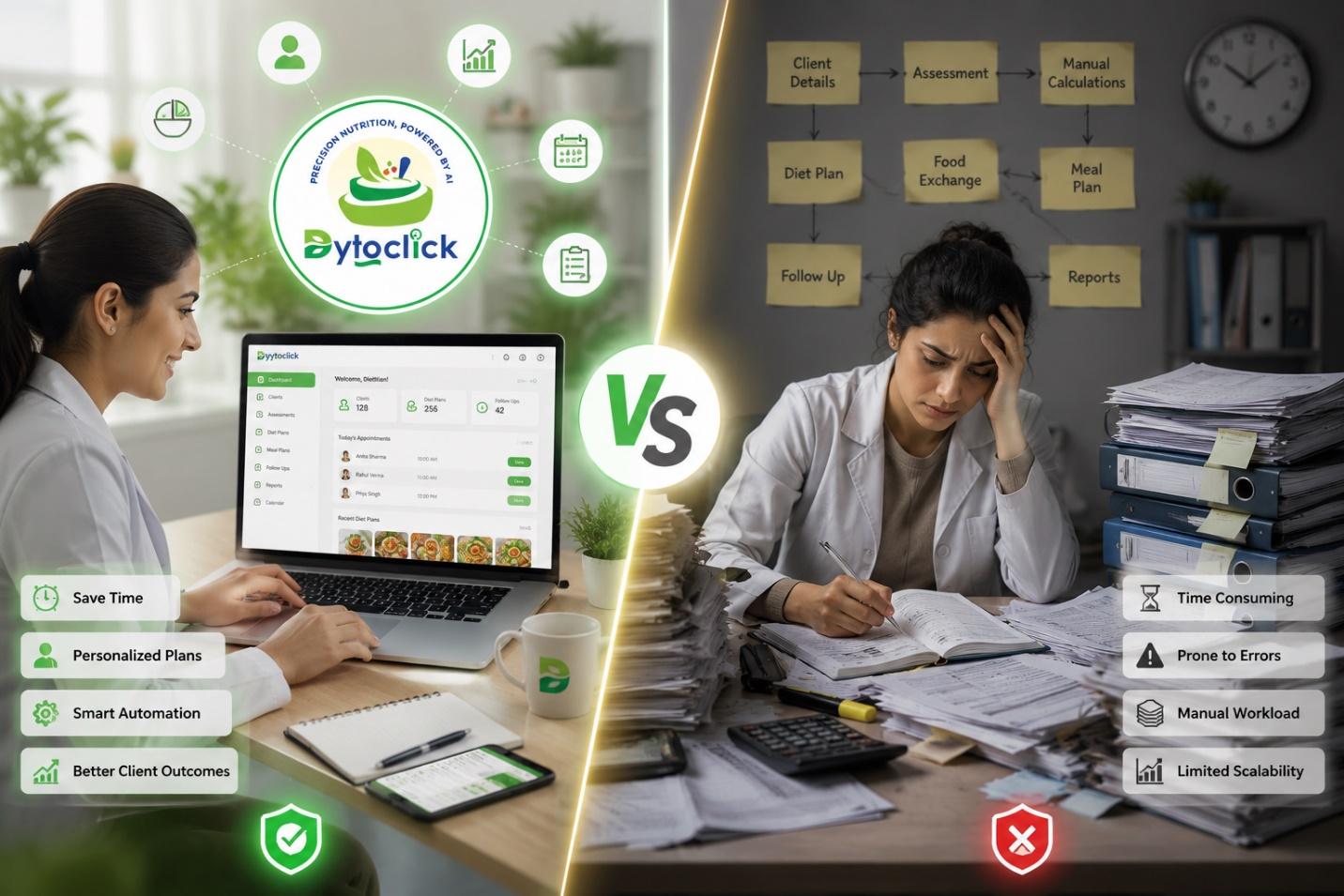
Creating personalized diet plans is one of the most important responsibilities of a dietitian. However, the way those plans are created has changed dramatically over the years. While many professionals still rely on manual methods like spreadsheets, notebooks, and repetitive templates, digital platforms are transforming the process.
When comparing Dytoclick vs manual diet planning, the biggest difference is efficiency without compromising personalization. Modern software helps dietitians spend less time on paperwork and more time delivering quality nutrition care.
Let's explore which approach works best in today's fast-paced healthcare environment.
Manual Diet Planning: The Traditional Approach
For years, dietitians have successfully created meal plans manually. This method often involves reviewing assessments, calculating nutritional requirements, selecting foods, and preparing customized diet charts from scratch.
Common Challenges of Manual Planning
Although effective, manual planning can become time-consuming as client numbers grow.
Some common difficulties include:
For independent practitioners with a handful of clients, this may be manageable. But scaling a practice becomes increasingly difficult.
What Makes Dytoclick Different?
Dytoclick is designed specifically for dietitians who want to simplify their workflow while maintaining personalized nutrition care.
Instead of replacing professional expertise, it supports clinical decision-making by reducing repetitive administrative tasks.
Key Advantages
The result is more time available for patient counselling, education, and relationship building.
Dytoclick vs Manual Diet Planning: Side-by-Side Comparison

1. Time Required
Manual Diet Planning: Takes around 30–40 minutes to create a personalized diet plan. Dytoclick: Offers a much faster workflow, helping you create diet plans in significantly less time.
2. Client Records
Manual Diet Planning: Client information is often stored across multiple files, spreadsheets, or paper records. Dytoclick: Keeps all client records centralized in one secure digital platform.
3. Personalization
Manual Diet Planning: Requires manual calculations and effort to personalize each diet plan. Dytoclick: Makes personalized nutrition planning easier with streamlined tools and smart workflows.
4. Follow-Ups
Manual Diet Planning: Follow-ups rely on manual reminders and record-keeping. Dytoclick: Simplifies client management with automated follow-up tracking and reminders.
5. Practice Growth
Manual Diet Planning: Growth is often limited by the time spent on repetitive administrative tasks. Dytoclick: Helps you scale your practice more efficiently by reducing manual workload and improving productivity.
How Dytoclick Simplifies Daily Practice
Here's how a typical workflow looks: 1. Complete the client's assessment. 2. Review nutrition requirements. 3. Generate a personalized diet plan efficiently. 4. Save client information securely. 5. Schedule follow-ups. 6. Track progress over time.
Instead of repeating routine tasks for every client, dietitians can focus on clinical care and meaningful conversations.
Why Efficiency Matters
As nutrition practices grow, administrative work often grows faster than client care.
By reducing repetitive work, dietitians can:
Technology should support healthcare professionals—not replace them.
The Future of Diet Planning
Healthcare is becoming increasingly digital, and nutrition practice is evolving alongside it.
Patients expect quicker communication, personalized recommendations, and continuous support. Digital tools help dietitians meet these expectations without sacrificing quality.
Whether you're an independent consultant or managing a growing nutrition clinic, adopting the right technology can improve both client experience and practice efficiency.
If you're looking to modernize your workflow, Dytoclick offers an all-in-one platform built specifically for dietitians. Learn more at Dytoclick and discover how technology can simplify personalized nutrition planning.
Frequently Asked Questions (FAQs)
1. What is the difference between Dytoclick and manual diet planning?
Manual diet planning relies on calculations, templates, and paperwork, while Dytoclick streamlines these tasks with digital tools, making personalized nutrition planning faster and more organized.
2. Does Dytoclick replace a dietitian's expertise?
No. Dytoclick is designed to support dietitians by reducing administrative work. Professional judgment and personalized recommendations always remain with the practitioner.
3. Can Dytoclick create personalized diet plans?
Yes. Dytoclick helps dietitians efficiently create personalized nutrition plans based on individual client assessments and nutritional requirements.
4. Why is manual diet planning time-consuming?
Manual planning requires repeated calculations, documentation, meal plan creation, and follow-up management, which can significantly increase workload as the client base grows.
5. Is Dytoclick suitable for independent dietitians?
Yes. Whether you're a solo practitioner or part of a larger clinic, Dytoclick can help improve workflow, save time, and manage clients more efficiently.
6. How does Dytoclick improve client follow-ups?
The platform helps organize client information and streamlines follow-up management, making it easier to monitor progress and maintain consistent communication.
7. Who should choose Dytoclick over manual diet planning?
Dietitians who want to save time, improve organization, enhance client management, and scale their practice without increasing administrative burden can benefit from using Dytoclick.