In today's fast-evolving healthcare landscape, dietitians are expected to deliver highly personalized care while managing increasing client loads, complex health profiles, and ever-growing administrative tasks. Artificial Intelligence (AI) has emerged as a transformative force, helping modern dietitian practices scale efficiently without compromising quality. By automating routine workflows, providing data-driven insights, and enhancing client engagement, AI enables dietitians to focus more on clinical decision-making and less on operational overwhelm.
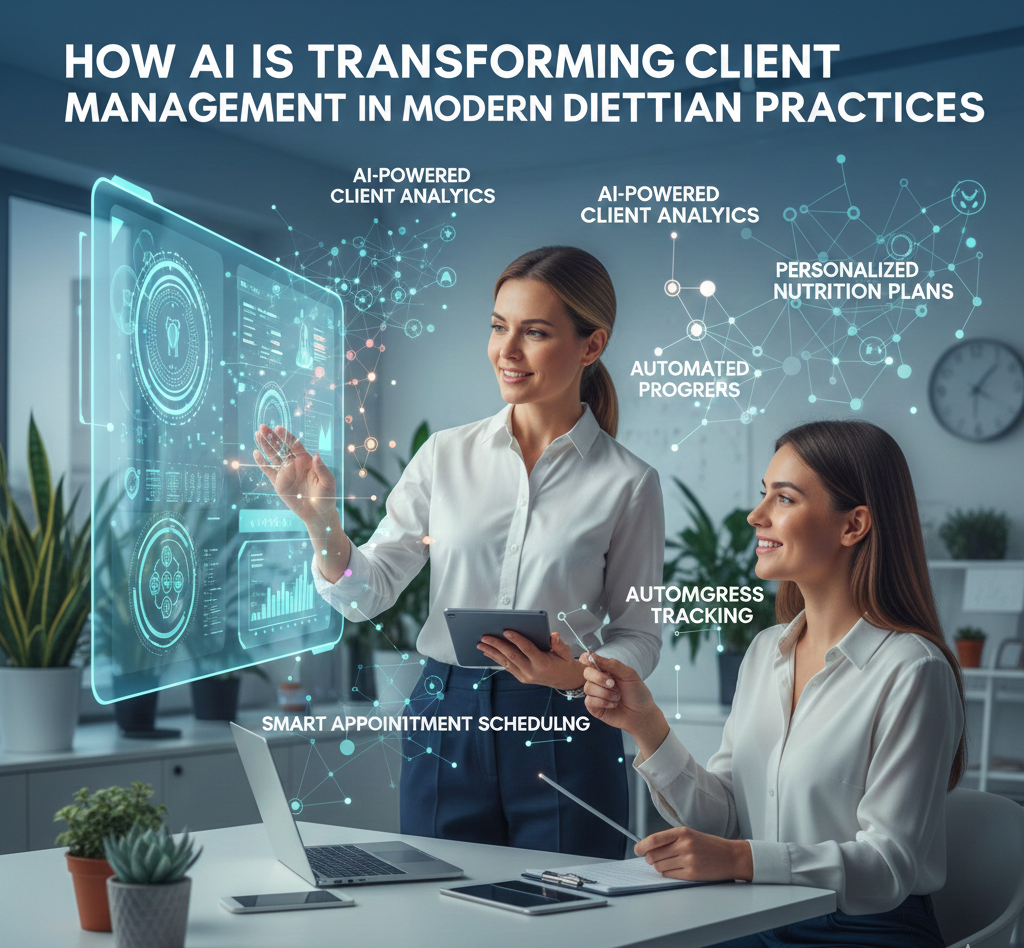
1. Automating Time-Consuming Administrative Work
AI simplifies appointment scheduling, reminders, billing, and documentation.
Smart dashboards help track client progress automatically.
Automated follow-ups ensure no client slips through the cracks.
This frees up valuable consultation time and reduces burnout.
2. Enhancing Personalization Through Data-Driven Nutrition Plans
AI tools analyze food logs, activity patterns, lab reports, and preferences to generate custom nutrition strategies.
Automated nutrient breakdowns and recipe recommendations make diet planning faster and more precise.
Predictive analytics identify risk factors early (e.g., anemia trends, blood sugar spikes).
This level of personalization strengthens client trust and improves long-term outcomes.
3. Streamlining Client Communication and Support
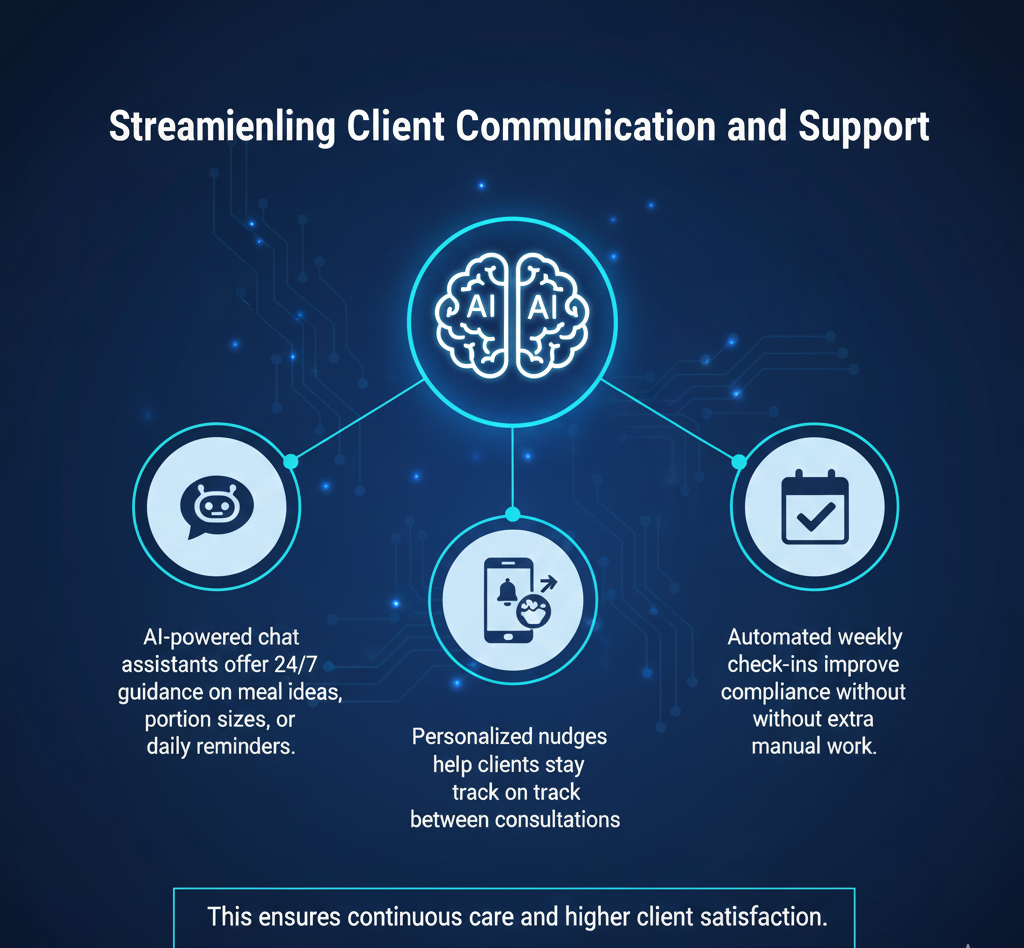
AI-powered chat assistants offer 24/7 guidance on meal ideas, portion sizes, or daily reminders.
Personalized nudges help clients stay on track between consultations.
Automated weekly check-ins improve compliance without extra manual work.
This ensures continuous care and higher client satisfaction.
4. Improving Clinical Decisions With Smart Insights
AI interprets patterns in blood tests, weight trends, symptom journals, and dietary adherence.
Visual reports make it easier to identify deficiencies, inflammation patterns, or metabolic issues.
Decision-support tools recommend evidence-based interventions for conditions like PCOS, fatty liver, or CKD.
This strengthens diagnostic accuracy and enhances therapeutic outcomes.
5. Scaling Group Programs and Community Consultations
AI automates enrollment, monitoring, and progress tracking for group-based programs (weight loss, diabetes care, pregnancy nutrition).
Bulk analytics provide insight into group performance and individual risk zones.
Dietitians can scale from managing dozens to hundreds of participants with the same bandwidth.
6. Increasing Practice Efficiency With Smart Integrations
AI systems connect with wearables, lab portals, EHRs, and client apps.
Real-time syncing prevents errors and eliminates data duplication.
Integrated workflows enable multi-practitioner teams to collaborate seamlessly.
Result: smoother operations and faster service delivery
7. Boosting Client Retention and Long-Term Engagement
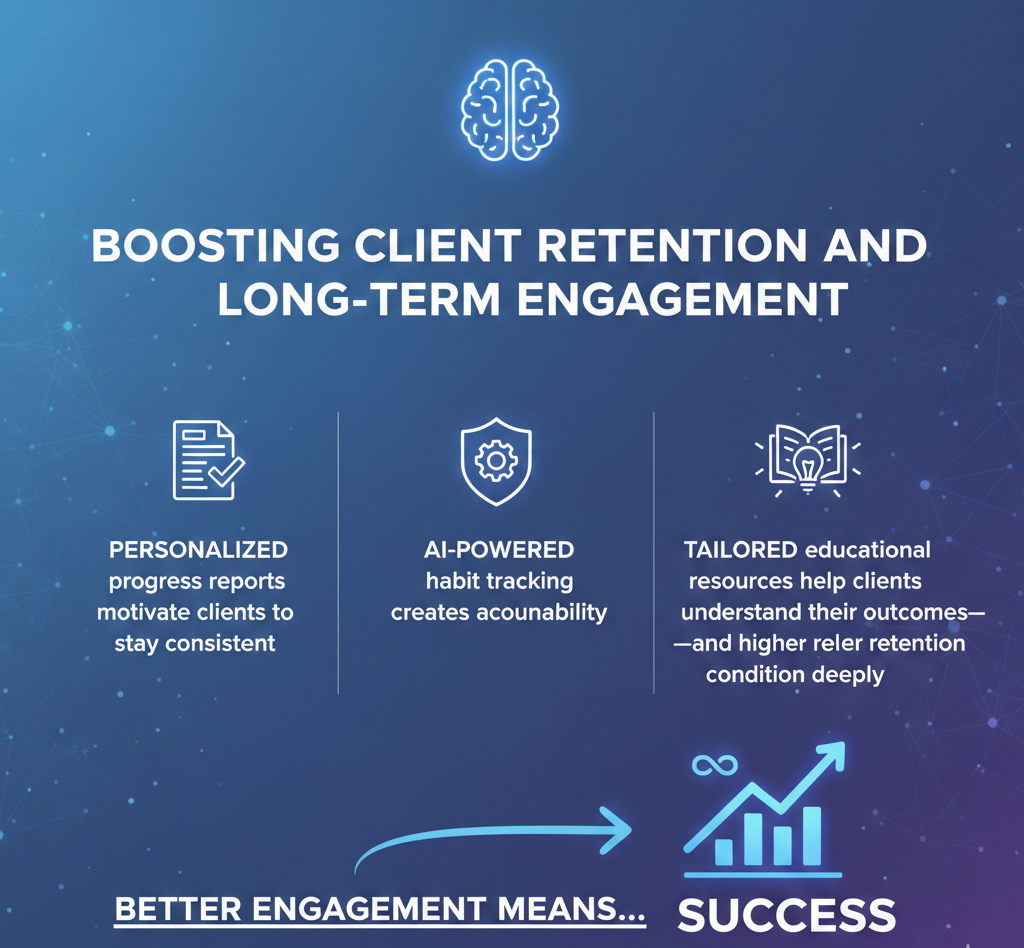
Personalized progress reports motivate clients to stay consistent.
AI-powered habit tracking creates accountability.
Tailored educational resources help clients understand their outcomes—and higher retention condition deeply.
Better engagement means better
1. How does AI help dietitians manage more clients without compromising care quality?
AI automates repetitive tasks—such as scheduling, reminders, progress tracking, and documentation—allowing dietitians to handle larger client loads efficiently. By reducing administrative burden and offering smart insights from client data, AI ensures that dietitians can focus more on delivering high-quality, personalized nutrition guidance.
2. Can AI improve the accuracy of personalized nutrition plans?
Yes. AI analyzes patterns in food logs, activity levels, lab reports, medical history, and dietary preferences to generate highly personalized plans. It also identifies nutrient gaps or risk factors earlier, helping dietitians make evidence-based adjustments that improve clinical outcomes.
3. How does AI support client engagement between follow-up sessions?
AI tools offer automated check-ins, reminder notifications, daily nudges, and even AI-powered chat support to help clients stay on track. These real-time interactions provide ongoing motivation, boost adherence, and prevent clients from feeling disconnected between appointments.
4. Is AI useful for group nutrition programs or only individual consultations?
AI is highly effective for both. For group programs—such as weight management or diabetes coaching—AI can automate enrollment, track participant progress, flag high-risk individuals, and provide bulk analytics. This allows a dietitian to efficiently manage dozens or even hundreds of participants while maintaining personalized oversight.
Final Insight
AI is no longer a futuristic add-on; it is a practical necessity for dietitians who want to scale their practice efficiently while delivering superior, personalized care. By automating routine tasks, enhancing clinical insights, and improving client engagement, AI empowers modern dietitians to grow sustainably, serve more clients, and focus on what truly matters—transforming lives through nutrition.
Dytoclick is an innovative software designed specifically for dietitians, helping them create personalized nutrition plans and efficiently manage client progress. Along with its practical tools, Dytoclick also serves as a reliable knowledge platform, offering expert content on diet, nutrition, and health-related topics. By combining technology with education, Dytoclick empowers professionals to make informed dietary recommendations that support both physical and mental well-being.