AI is reshaping modern nutrition practice, helping dietitians and health coaches move beyond manual tracking, repetitive tasks, and generalized meal plans. With intelligent automation and personalized data insights, AI platforms enable practitioners to create precise, patient-centric nutrition strategies. Here's how AI can be seamlessly integrated into daily nutrition coaching:
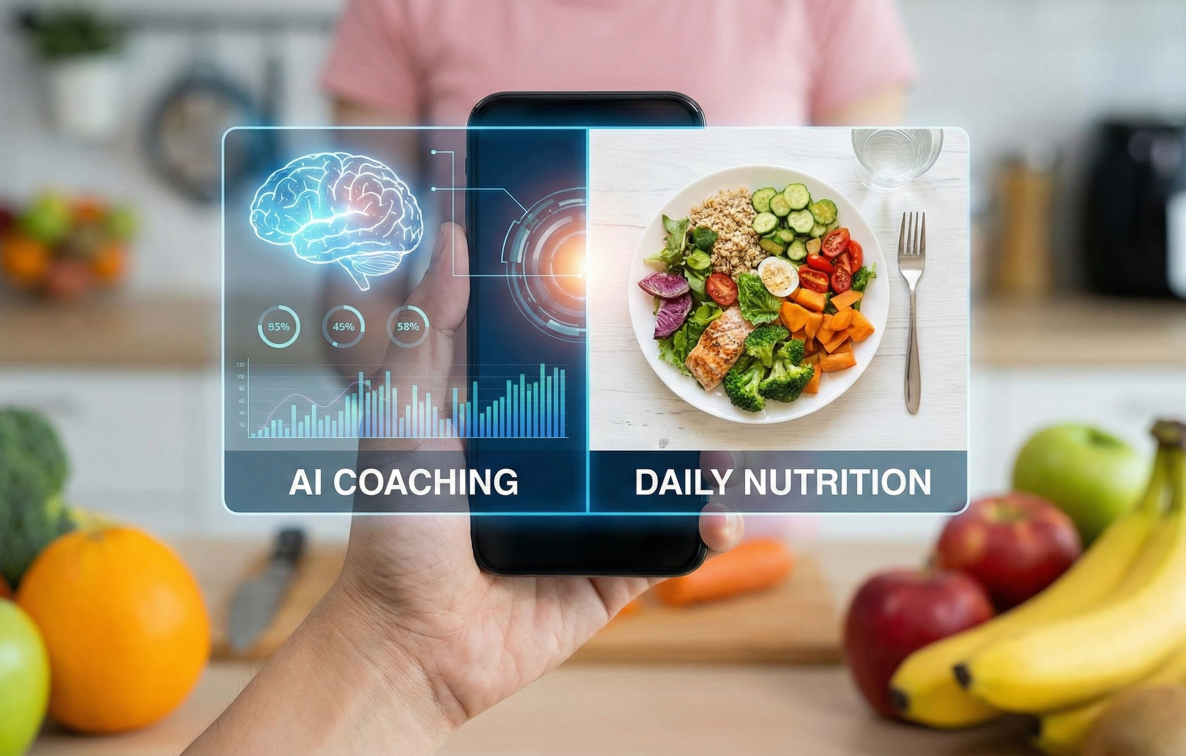
1. Streamlined Client Assessment
AI tools can analyze large datasets—diet recalls, food logs, lab reports, and wearable data—to generate quick nutritional summaries.
Automated assessment reduces manual workload, allowing dietitians to spend more time discussing behavioral change and counselling.
Some platforms provide risk alerts for deficiencies, metabolic concerns, digestive issues, or food–symptom correlations.
2. Personalized Meal Planning at Scale
AI platforms generate individualized meal plans based on calories, macros, health conditions, allergies, ingredients available at home, and cultural preferences.
Real-time modification features allow dietitians to adjust macros, swap foods, or change recipes instantly during sessions.
Smart recipe engines ensure variety while maintaining nutritional goals, supporting better client satisfaction and adherence.
3. Continuous Monitoring & Real-Time Feedback
Wearables (CGM, fitness trackers, smart scales) sync with AI systems to track glucose trends physical activity, hydration, and sleep patterns.
AI interprets daily fluctuations and sends insights like: "Low protein intake today," "Possible dehydration," or "Glucose spike after dinner."
This allows coaches to intervene quickly, improving outcomes and client accountability.
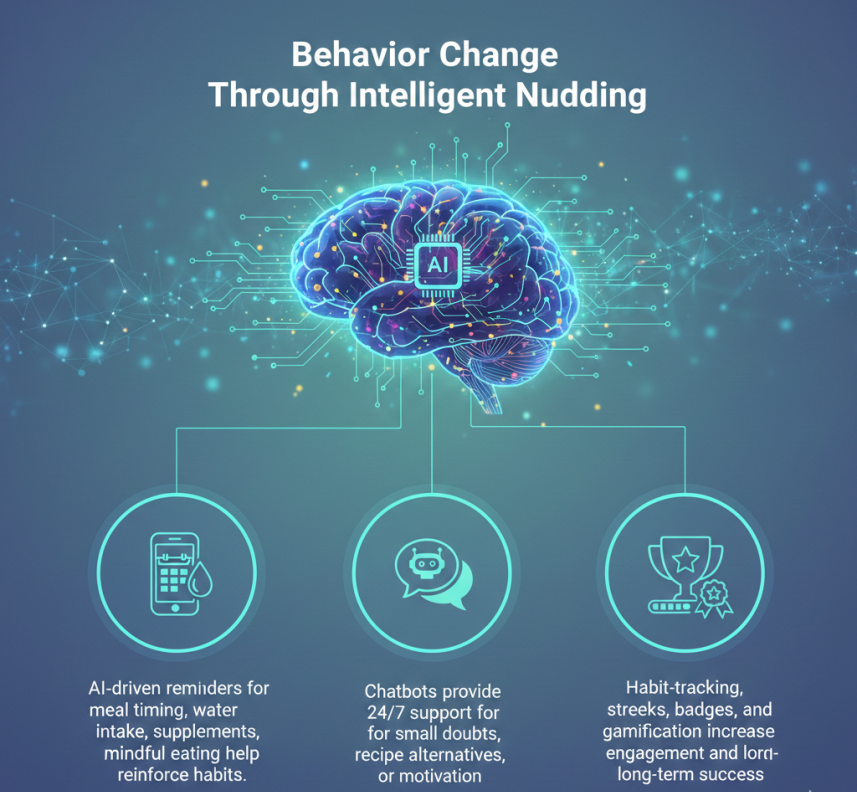
4. Behavior Change through Intelligent Nudging
AI-driven reminders for meal timing, water intake, supplements, or mindful eating help reinforce habits.
Chatbots provide 24/7 support for small doubts, recipe alternatives, or motivation.
Habit-tracking, streaks, badges, and gamification increase engagement and long-term success.
5. Efficiency in Documentation & Reporting
AI systems can auto-generate diet charts, follow-up notes, progress reports, and compliance scores.
NLP tools convert voice notes or session recordings into structured documentation.
This reduces admin time and ensures more accurate record-keeping.
6. Smarter Decision-Making with Predictive Analytics
Predictive algorithms estimate how clients may respond to various dietary patterns (low-carb, low-GI, high-protein, Mediterranean, etc.).
AI can forecast weight trends, metabolic improvements, nutrient gaps, or risk zones.
Early detection of plateaus helps dietitians make timely strategic adjustments.
7. Engaging Visual Dashboards
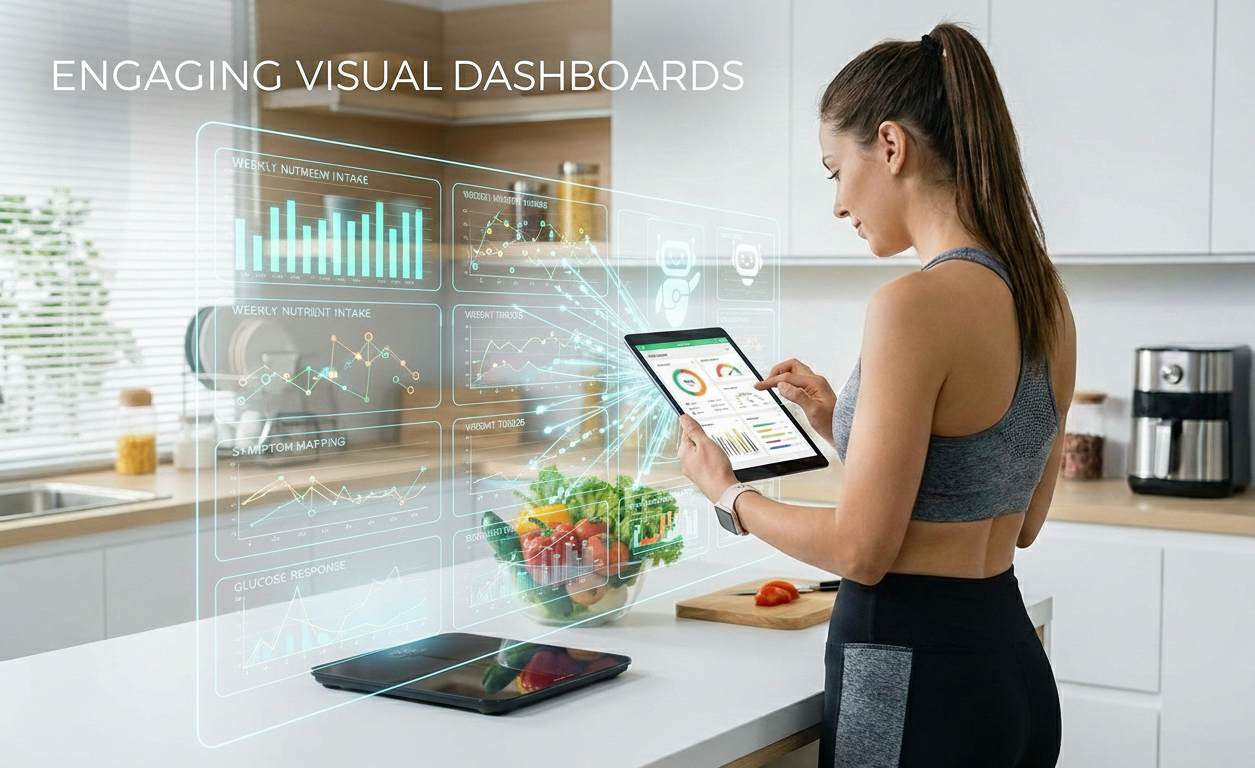
AI visualizes client data into easy-to-understand graphs: weekly nutrient intake, symptom mapping, weight trends, or glucose responses.
Clients gain clearer insight into their progress, making sessions more interactive.
Shared dashboards promote transparency and trust.
8. Enhanced Accuracy & Reduced Errors
AI minimizes errors in calorie calculations, macro breakdowns, portion estimates, and nutrient analysis.
Image-based food recognition, barcode scanning, and automated dietary analysis boost accuracy.
Consistent data improves the quality of every recommendation.
9. Scalable Nutrition Practice
Automation enables coaches to handle more clients without compromising personalization.
AI manages follow-ups, reminders, scheduling, and check-in messages seamlessly.
This supports hybrid practices—online, offline, and telehealth—while improving overall efficiency.
1. How does AI improve accuracy in daily nutrition coaching?
AI enhances accuracy by automating calorie calculations, macro distribution, and nutrient analysis. Using barcode scanning, image-based recognition, wearable data, and large food databases, AI reduces human errors that often occur during manual logging. Algorithms verify portion sizes, detect inconsistencies, and highlight nutrient gaps, enabling dietitians to make more precise, evidence-based recommendations.
2. Can AI help dietitians personalize meal plans more effectively?
Yes. AI platforms generate individualized meal plans based on a client's calorie needs, medical conditions, allergies, cultural preferences, dislikes, and available ingredients. Coaches can instantly edit or swap foods, adjust macros, or create balanced weekly plans. This level of personalization—done within seconds—allows dietitians to serve more clients without compromising quality.
3. How does AI support real-time progress monitoring?
AI integrates data from wearables such as continuous glucose monitors, smart scales, and fitness trackers. It analyzes trends in glucose, sleep, hydration, activity, and dietary patterns, then offers actionable insights like "late-night glucose spike" or "insufficient protein intake." This real-time tracking helps dietitians intervene early, improving adherence and outcomes.
4. Is AI a replacement for dietitians and nutrition coaches?
No. AI is a support tool, not a substitute. It automates time-consuming tasks—data analysis, documentation, reminders—so dietitians can focus on human-centered aspects like counseling, behavior change, emotional support, and personalized decision-making. AI enhances the efficiency and expertise of the practitioner rather than replacing the relationship-driven nature of nutrition care.
Integrating AI into daily nutrition coaching is transforming traditional practice into a smarter, data-driven system—and Dytoclick is built exactly for this future. Designed specifically for dietitians, Dytoclick streamlines routine tasks, strengthens data analysis, and enables the creation of highly personalized nutrition plans. Beyond its practical tools, it also functions as a trusted knowledge platform, offering expert content on diet, nutrition, and health. By blending intelligent automation with evidence-based education, Dytoclick empowers professionals to focus on what matters most: deep patient understanding, personalized guidance, and long-term behavior change. This leads to better outcomes, stronger engagement, and a modern, future-ready nutrition practice.