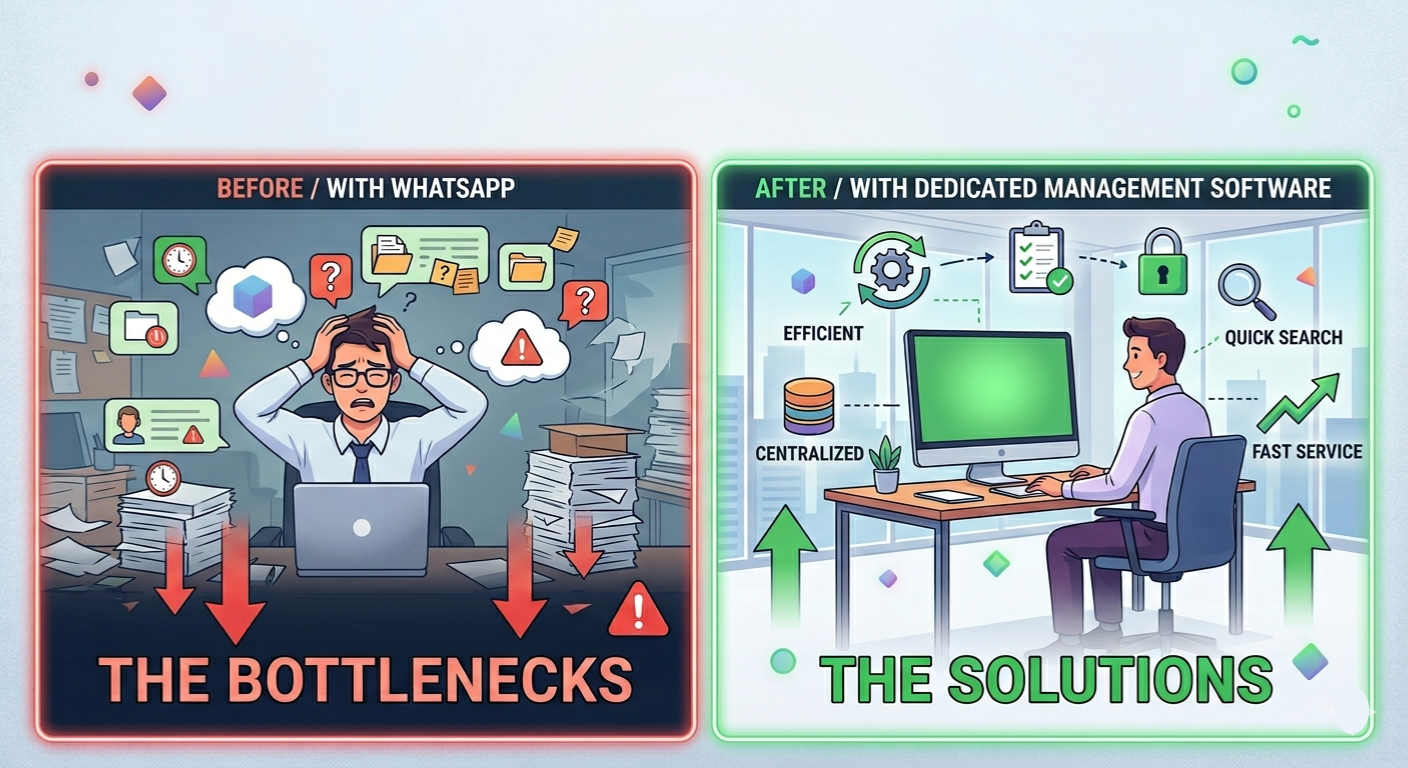
In today's digital world, WhatsApp has become a go-to communication tool for many healthcare professionals, nutritionists, dietitians, and wellness coaches. It's fast, familiar, and convenient. But have you ever stopped to ask yourself: Is using WhatsApp to manage clients actually helping your practice grow—or holding it back?
While WhatsApp works well for quick conversations, relying on it as your primary client management system can create hidden challenges that impact efficiency, organization, and client satisfaction.
Why WhatsApp Seems Like the Easy Choice
At first glance, WhatsApp appears to be the perfect solution. It allows instant communication and requires little setup.
Common Reasons Professionals Use WhatsApp
However, as your client base grows, these advantages can quickly become limitations.
The Hidden Problems of Managing Clients on WhatsApp
When you have only a handful of clients, WhatsApp may seem manageable. But scaling your practice is a different story.
1. Important Information Gets Lost
Client progress reports, meal plans, follow-up notes, and feedback can easily disappear within long chat threads.
2. No Centralized Client Records
Searching through dozens of conversations to find a client's history wastes valuable time.
3. Follow-Ups Become Inconsistent
Without automated reminders, appointments and check-ins can be forgotten by both you and your clients.
4. Professional Boundaries Blur
Constant notifications and after-hours messages can make it difficult to maintain a healthy work-life balance.
What a Dedicated Client Management Platform Offers
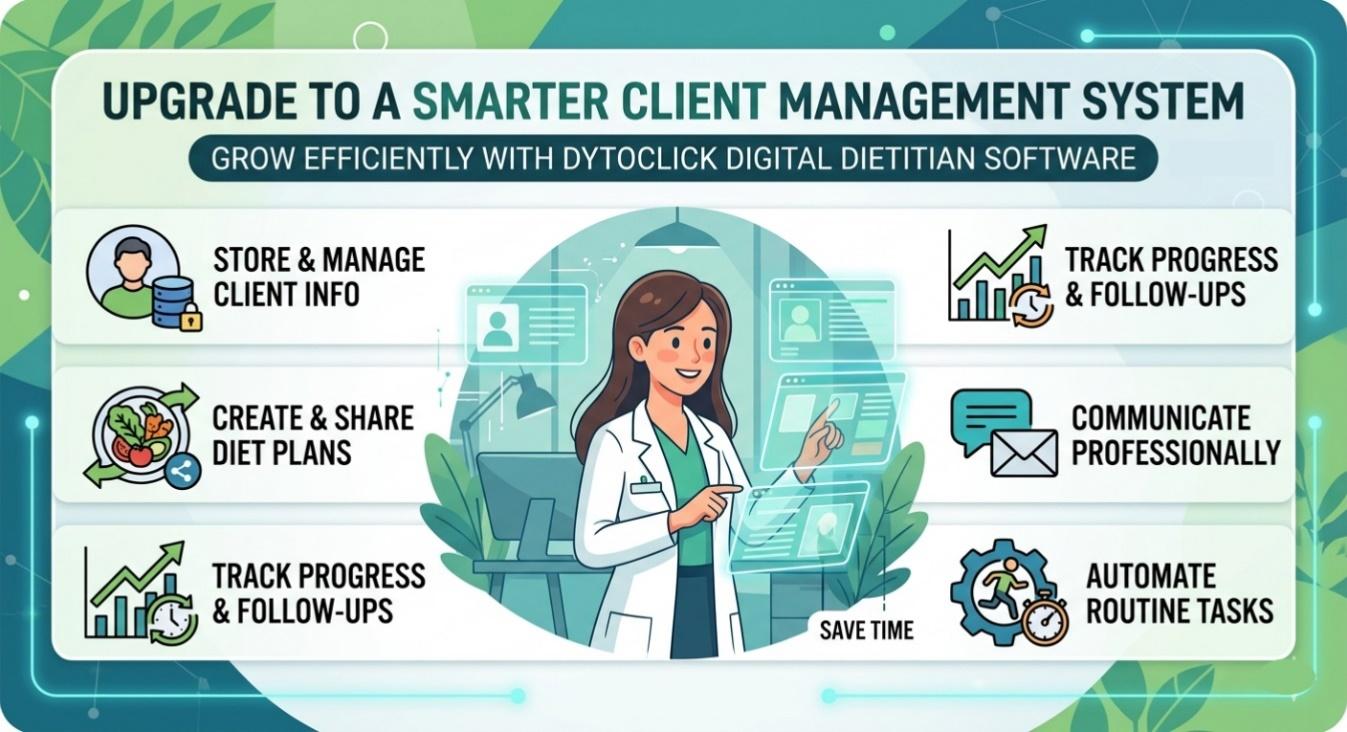
Instead of juggling multiple chats, modern practice management tools help you stay organized and efficient.
Key Benefits Include
These features allow you to spend less time managing messages and more time delivering quality care.
How Dytoclick Helps Modern Practices Grow
At Dytoclick, professionals can streamline client management without relying on endless WhatsApp conversations.
A Better Workflow in 3 Simple Steps 1. Store all client information in one place. 2. Automate follow-ups and appointment reminders. 3. Track progress and communicate professionally through a structured system.
This creates a smoother experience for both practitioners and clients while supporting long-term business growth.
Important Takeaway
WhatsApp is a communication tool—not a complete client management solution.
As your practice grows, relying solely on chat messages can lead to missed opportunities, lost information, and reduced efficiency. Investing in a dedicated platform Dytoclick helps create a more organized, scalable, and professional client experience.
Frequently Asked Questions (FAQ)
1. Is WhatsApp good for managing clients?
WhatsApp is useful for communication, but it lacks advanced features such as client records, automated follow-ups, progress tracking, and appointment management.
2. Why can WhatsApp slow down a growing practice?
As client numbers increase, finding information, tracking progress, and managing follow-ups through chat threads becomes time-consuming and inefficient.
3. What are the risks of using WhatsApp for client management?
Common risks include lost information, missed follow-ups, inconsistent record-keeping, and difficulty maintaining professional boundaries.
4. What is a better alternative to WhatsApp for client management?
Dedicated client management platforms like Dytoclick provide centralized records, automation, scheduling, and progress tracking designed specifically for professional practices.
5. How does Dytoclick improve client engagement?
Dytoclick helps automate reminders, organize client data, monitor progress, and maintain consistent communication, leading to a better client experience.
6. Is Dytoclick suitable for dietitians and nutrition professionals?
Absolutely. Dytoclick is designed to support dietitians, nutritionists, wellness coaches, and other healthcare professionals who want to streamline client management.
7. When should I move from WhatsApp to a client management platform?
If you're spending too much time searching chats, manually sending reminders, or managing growing client workloads, it's a strong sign that your practice is ready for a dedicated solution.