Personalized nutrition has become one of the most talked-about approaches in modern healthcare. The idea is simple: provide customized diet plans based on an individual’s lifestyle, health conditions, and goals.
However, despite its promise, many nutrition professionals struggle to deliver truly personalized care. One major reason behind this problem is manual tracking systems.
When dietitians rely on spreadsheets, notebooks, WhatsApp messages, or scattered files to manage clients, personalized nutrition becomes difficult to implement effectively.

Why Manual Tracking Is Slowing Down Personalized Nutrition
Manual tracking may work when managing a small number of clients. But as your nutrition practice grows, it creates multiple challenges that affect efficiency and client outcomes.
1. Disorganized Client Data
In many nutrition practices, client information is spread across different platforms such as WhatsApp chats, Google Sheets, emails, and handwritten notes.
This scattered system makes it difficult to access client history, track progress, or update diet plans quickly.
2. Time-Consuming Client Management
Manual systems require dietitians to spend hours on repetitive tasks such as: Updating diet charts Reviewing food logs Sending follow-up messages Tracking progress manually
Instead of focusing on improving nutrition strategies, professionals often spend most of their time managing data.
3. Higher Risk of Errors
Manual data entry increases the chances of mistakes. Important updates may be missed, follow-ups can be forgotten, and calculations may be inaccurate.
These errors can impact the quality of personalized nutrition plans and reduce client satisfaction.
4. Difficult Progress Monitoring
Tracking client progress is essential for successful personalized nutrition. However, with manual systems, it becomes difficult to analyze trends, monitor improvements, or adjust diet plans efficiently.
Without proper tracking, personalization becomes limited and less effective.
5. Limited Ability to Scale a Nutrition Practice
A manual workflow restricts how many clients a dietitian can manage effectively. As the number of clients increases, organizing information and maintaining quality care becomes challenging.
This is one of the biggest barriers to scaling a nutrition practice.
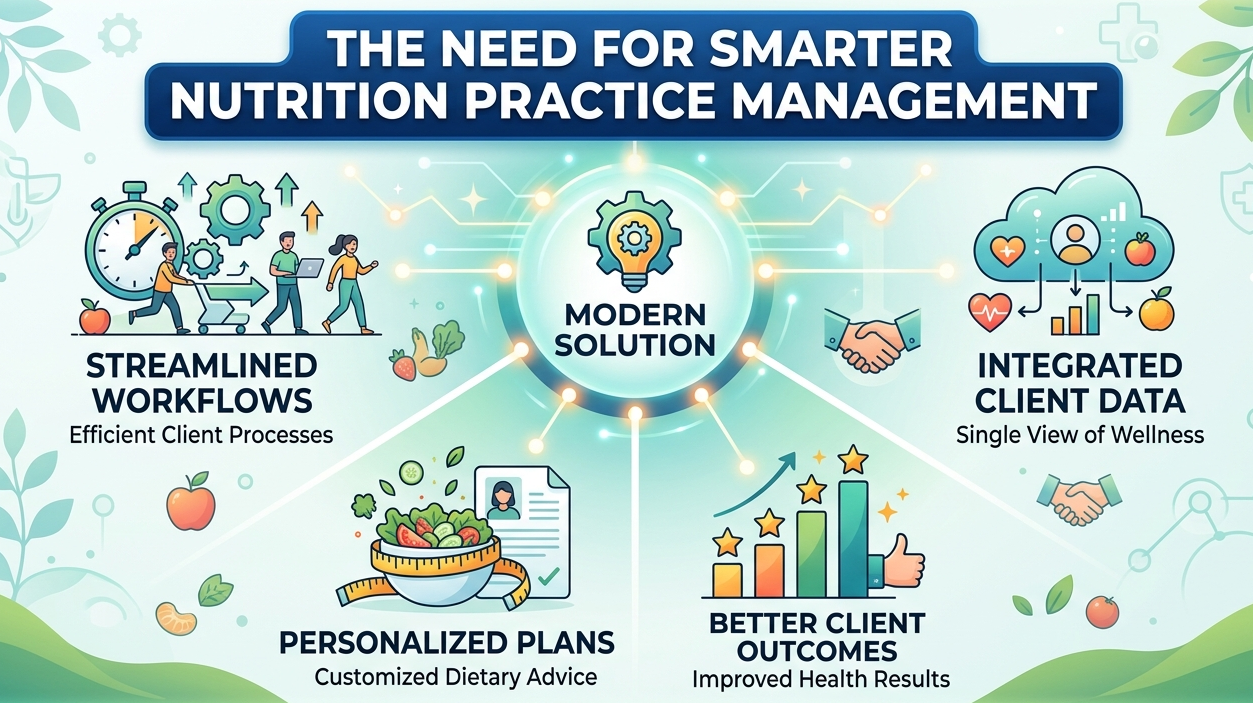
The Need for Smarter Nutrition Practice Management
To deliver effective personalized nutrition, dietitians need systems that simplify their workflow and organize client data efficiently.
Modern nutrition practice management software allows professionals to: Store all client information in one place Track progress automatically Create and update diet plans faster Schedule follow-ups and reminders Manage more clients without burnout
By automating repetitive tasks, dietitians can focus more on client care and nutrition planning.
The Future of Personalized Nutrition
The future of personalized nutrition lies in technology-driven practice management. Digital tools help nutrition professionals provide better client experiences while improving efficiency.
Platforms like Dytoclick enable dietitians to manage clients, monitor progress, and deliver personalized nutrition programs in a more organized and scalable way.
Final Thoughts
Personalized nutrition is not failing because the concept is flawed. The real issue lies in outdated manual tracking systems.
By adopting modern nutrition practice management tools, dietitians can streamline their workflow, improve client outcomes, and truly deliver the personalized nutrition experience clients expect.
Platforms like Dytoclick are designed specifically for nutrition professionals who want to move beyond manual client management. With features that help organize client data, track progress, manage diet plans, and automate follow-ups, Dytoclick allows dietitians to deliver truly personalized care while saving time and scaling their practice more efficiently.
FAQs:
1. Why is manual tracking a problem in personalized nutrition?
Manual tracking often leads to disorganized client data, time-consuming tasks, and higher chances of errors, making it difficult for dietitians to deliver truly personalized care.
2. How does manual tracking affect a dietitian’s workflow?
Manual systems require dietitians to spend significant time updating diet charts, reviewing food logs, and managing client data, reducing time for actual nutrition planning.
3. What challenges arise when managing many clients with manual systems?
As the number of clients grows, manual tracking becomes difficult to manage, making it harder to organize data, monitor progress, and maintain quality care.
4. How can nutrition practice management software improve personalized nutrition?
Nutrition practice management software helps dietitians store client data in one place, automate tracking, manage diet plans efficiently, and scale their practice more effectively.