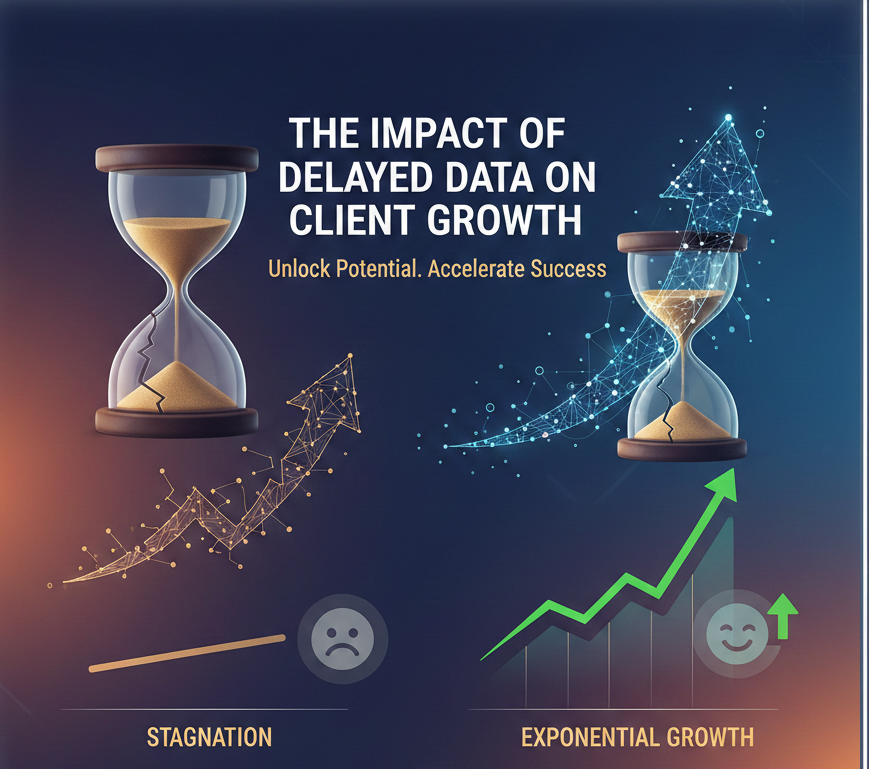
In a data-driven environment, timely insights are critical for client success. Whether in healthcare, coaching, consulting, or digital services, delayed data disrupts momentum and reduces measurable outcomes. Real-time reporting supports faster decisions, stronger engagement, and improved performance. When information arrives late, client progress naturally slows.
Below are the key reasons why delayed data negatively impacts growth and results.
1. Slower Decision-Making
Data guides strategy. When reports, analytics, or progress updates are delayed, professionals cannot make timely adjustments. This leads to postponed decisions and missed improvement opportunities.
For example, without up-to-date performance metrics, service providers may continue using ineffective strategies. Real-time data ensures immediate corrections, helping clients stay on track and achieve faster results.
2. Reduced Client Motivation
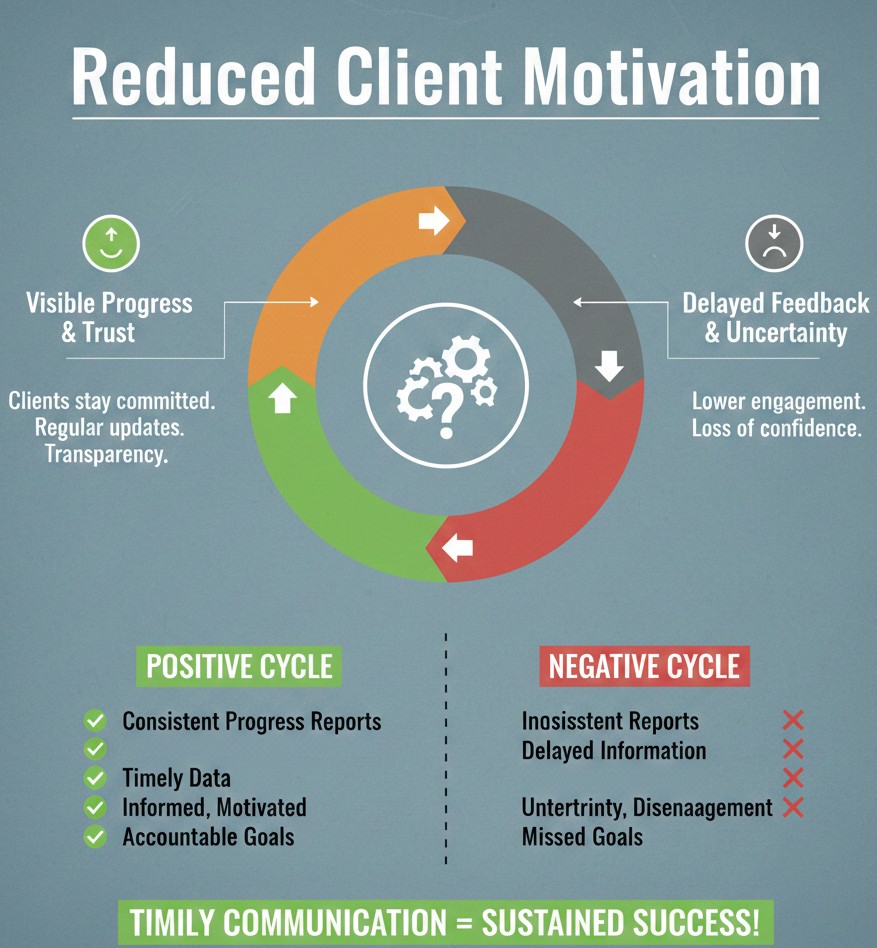
Clients stay committed when they see visible progress. Regular updates create transparency and trust. However, delayed feedback can cause uncertainty and lower engagement levels.
When clients do not receive consistent progress reports, they may lose confidence in the process. Timely data keeps them informed, motivated, and accountable to their goals.
3. Reactive Instead of Proactive Planning
Delayed data forces professionals to react to problems after they arise instead of preventing them early.
Proactive strategies depend on continuous monitoring and early insights. When information is outdated, small performance gaps can grow into larger setbacks. Real-time analytics allow quick intervention and smarter planning.
4. Inefficient Use of Resources
Outdated data can lead to poor resource allocation. Time, money, and effort may be invested in strategies that are no longer effective.
Accurate and current insights help professionals optimize operations, improve productivity, and deliver better value to clients. Efficient data management directly supports sustainable growth.
5. Slower Goal Achievement
Client progress depends on continuous evaluation and improvement. When tracking systems are delayed, growth becomes inconsistent.
Modern businesses benefit from automated reporting systems, live dashboards, and instant performance tracking. These tools accelerate results and maintain steady progress toward objectives.
Frequently Asked Questions (FAQs)
1. Why does delayed data negatively impact client progress?
Delayed data slows decision-making and prevents timely adjustments to strategies. When professionals do not receive real-time reports or updated metrics, they may continue ineffective approaches. This reduces efficiency, delays improvements, and ultimately slows overall client progress.
2. How does real-time data improve client engagement?
Real-time data increases transparency and accountability. When clients regularly see measurable progress through dashboards or instant reports, they feel more confident and motivated. Timely feedback strengthens trust, improves communication, and keeps clients committed to achieving their goals.
3. What is the difference between reactive and proactive planning in client management?
Reactive planning happens when professionals respond to problems after they occur, often due to delayed insights. Proactive planning, on the other hand, uses continuous monitoring and real-time analytics to prevent issues before they escalate. Proactive strategies lead to faster results, fewer setbacks, and better long-term outcomes.
Final Thoughts
Delayed data creates decision gaps, reduces motivation, encourages reactive planning, and slows overall client progress. In competitive industries—especially nutrition and healthcare—real-time tracking and accurate reporting are critical for sustainable success.
This is where Dytoclick plays an important role. Dytoclick is a software designed specifically for dietitians to make their work easier and more efficient. By offering structured client management, timely tracking, and organized data systems, it helps professionals avoid delays that can slow client progress. In addition, Dytoclick provides quality content support, enabling dietitians to deliver reliable information while focusing on personalized care.By integrating smart digital solutions like Dytoclick, professionals can improve efficiency, enhance client engagement, and ensure faster, data-driven results.